

Workshop Introduction -Third International Workshop on Closed Ecological Systems 24-27 April 1992

Mark Nelson Director, Space Applications,
Space Biospheres Ventures Member Biosphere 2 crew, 1991-93 closure

1. The Field of Closed Ecological Systems and Biospheric Science

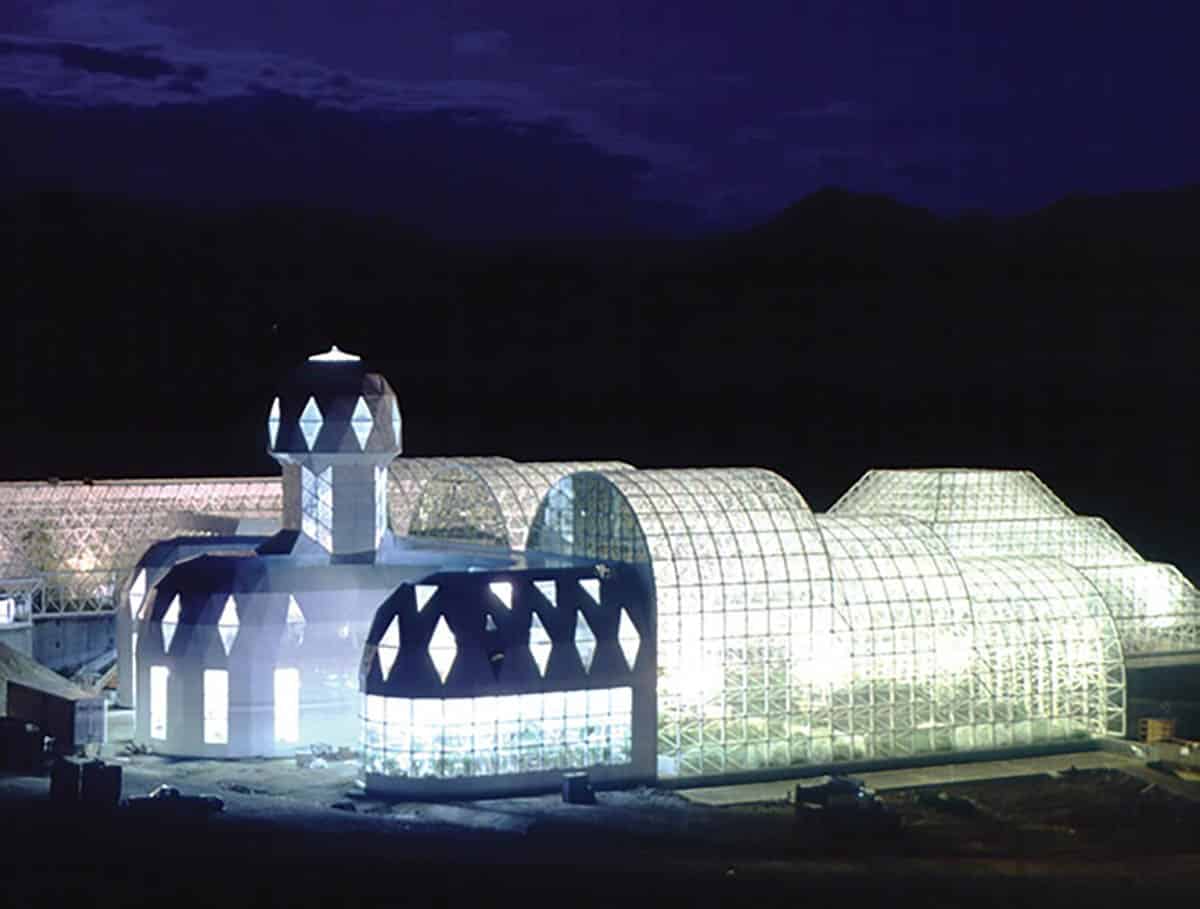
At the environmental symposium held just before the enclosure of the first crew inside Biosphere 2 on September 26, 1991, the geophysicist Keith Runcorn made a salient point about the scientific process. He said it has now become an accepted principal in the physical sciences that the invention of a new type of laboratory facility or instrument (such as the gamma ray telescope or cyclotron) makes possible a whole new way of seeing natural phenomenon -we literally see what we have never before seen and our understanding of nature is dramatically advanced. Now that process is occurring in the ecological sciences with the development of a new class of object materially closed, energetically open ecosystems including man-made biospheres whose history is coincident with the beginnings of the Space Age in the 1950s and 1960s.

Over a decade ago, I had the delight of participating in a conversation that the ethologist, Konrad Lorenz had with some of his colleagues on the nature of scientific research. One said that real research is seeing what others have seen but understanding it in a new way. Lorenz agreed that was valuable, but said what was invaluable and the heart of science is to see what has never been seen before. Perhaps that is why we are so excited by the research data that is coming out of Biosphere 2. We have been privileged to see a new biospheric metabolism over the past seven months, with quite different component ratios, cycling rates and fluxes than those of our global biosphere. And this type of excitement is why this series of workshops on closed ecological systems have been so intellectually stimulating. We have new types of laboratories for studying fundamental processes and cycles of ecosystems -and the possibility of dramatically assisting in the evolving study of our natural environment and global biosphere. It was to advance that dialogue that five years ago we helped initiate this series of international workshops.

2. Brief resume of the series of international workshops

a. Royal Society, London, July 1987

This meeting brought together researchers representing the entire field to discuss the ecological theory underlying closed ecological systems, to review their history and evolution, the current research questions and their potential space applications

b. Krasnoyarsk, Siberia, September 1989

This was the first international scientific meeting ever held in Krasnoyarsk, Siberia at the Institute of Biophysics where the Bios-3 facility was developed and tested. Bios-3 was the landmark endeavor in the field, where closures of up to six months contained crews of 2-3 people, and recycled virtually all air and water and produced half of their food. Among the significant accomplishments of that meeting was a consensus on terminology in this new discipline. It will be useful to briefly list these terms, since they will be heard frequently during this workshop.

"Biospherics"

The science that deals with the laws governing the functioning of ecological systems which vary in size, degree of material closure and complexity as measured by their biodiversity and number of internal ecosystems. Thus this science encompasses the range of systems covered by the terms "synthetic ecology" or "engineered ecosystems" which means they are man-made objects rather than natural systems. But as a synthetic discipline it also covers the laws governing the functioning of natural ecosystems, biomes and the global biosphere. Biospherics thus embraces what is variously known as Earth system science, global ecology or, quite simply, the science of the biosphere. But those terms normally do not include man-made ecosystems. Biospherics is an integrative and practical endeavor uniting many disciples of biology, geology, chemistry, analogous to the role astronautics has played in the physical sciences.

"Microcosms" and "Mesocosms"

These miniaturized ecosystems were developed to permit laboratory study of a system such as a pond or coral reef, housed in a man-made container and enhanced by appropriate supporting technology such as artificial lights or mechanical wave generators to replace functions performed naturally in the wild. These ecological micro-mesocosms are open to interchange with the surrounding air, and generally require inputs of nutrients and water to replace that lost by evaporation.

"Materially closed ecospheres"

Clair Folsome and colleagues who first initiated small laboratory-sized systems saw that a crucial way in which such systems differ from previously developed ecological microcosms and mesocosms in that they are essentially materially closed (less the leak rate the facility suffers). Folsome therefore saw his laboratory flasks as heralding a new type of object -the materially-closed ecosystem. To differentiate these laboratory-sized systems from systems large enough to provide human life support, we can call them "materially-closed ecospheres." They are open to energetic input (indirect sunlight or artificial lighting) and information exchange (monitoring, sensors, observation).

"Bioregenerative technology"

Any type of technology capable of providing life-support materials that employs a biological mechanism, even if enhanced and supported by other technology, may be termed a Bioregenerative technology." Examples are plant growth chambers in which a particular crop is grown which regenerates part of its atmosphere, purifies some quantity of water through evapo-transpiration, and produces food; or a wastewater processing unit in which aquatic plants and microbes digest graywater and/or sewage producing biomass as well as air and water regeneration. Bioregenerative technologies are potential elements in a completely sufficient or partially sufficient closed ecological life support system.

"Controlled ecological life support systems" (CELSS)

Those in which at least a portion of the necessary life support materials are produced using Bioregenerative technologies. As the name implies, these systems employ a variety of technologies to enable and closely control biological elements, providing the chosen range of environmental conditions. However, a portion of the necessary life support materials may be provided by stored supplies and/or physical/chemica1 methods of recycling or cleanup rather than using only biological methods for their uptake and regeneration. Their degree of closure and regeneration is variable.

"Closed Ecological Life Support Systems"

A life support system that would be completely sufficient materially, and biologicallybased, would be a "closed ecological system," meaning that it was essentially materially closed and energetically open and recycled its material. Both the CELSS and Closed Ecological Life Support Systems terms assume that there is integration with mechanical devices and that environmental parameters are manipulated to ensure optimal production and operation. Both these types of system have generally concentrated on a few species of plants and/or algae for food production, air and water purification in addition to the crew compartments and associated mechanical/computer technologies. They are focused exclusively on life support for human inhabitants.

"Biospheric systems"

Since both CELSS and closed ecological systems contain essentially only one type of ecosystem -a basically agricultural one -for human life support, we can distinguish them from "Biospheric systems," such as the Biosphere 2 facility, which include a number of internal ecosystems. Biospheric systems are essentially materially closed, energetically and informationally-open like a closed ecological life support system, but their complexity provides complete life support for its human crew for an indefinite period of time. Because they include other ecosystems than agricultural ones, they enhance the potential study of analog processes and cycles that occur in the planetary biosphere.

Complete life support can be defined as 100 percent recycle of air, water, food and waste. The percentage accomplishment of each of these gives a ranking that may be applied to CELSS, closed ecological life support systems and Biospheric systems.

Ecospheres, CELSS, closed ecological systems and Biospheric systems must be open energetically or they would inevitably decline because of increasing entropy. Whether the light needed for photosynthesis is supplied by artificial lights or by sunlight, direct or delivered through "light-pipes," there is a need for such inputs and for a heat-sink on the outside for expelled unneeded heat.

3. Dialogue and comparative studies of engineered and natural ecosystems and Biospheric systems

The questions addressed in part by Biospheric science in creating and studying these various classes of objects are of direct relevance to researchers studying the Earth's biosphere. Their functioning depends as does the global biosphere on the creation and operation of adequate buffers, sufficient internal pathways for all trophic and energetic exchanges. But the modeling and data acquisition possible in engineered ecosystems with their vastly smaller dimensions and faster cycling times should yield considerable insight for our comprehension of global Biospheric functioning. Eventually this field of "comparative biospheres" should yield both descriptive and predictive knowledge, much as the science of comparative planetology is beginning to do.

Sponsor Acknowledgment Space Biospheres Ventures appreciates the assistance of the sponsors who supported the Third International Workshop on Closed Ecological Systems: Western Fuels Association, The International Center for Closed Ecological Systems Studies, Siberian Academy of Sciences, Institute of Ecotechnics, External Tanks Corporation, and The Center for Resource Management.

Workshop Dedication
This workshop was dedicated to the memories of two of the founders of the science of Biospherics: Clair Folsome, who pioneered laboratory-sized ecospheres at the University of Hawaii, and contributed greatly to our understanding of their long-term viability and thermodynamics; and Boris Kovrov, who was the guiding spirit behind the development of the Bios facilities in Siberia, which became the first system to include higher plants and human inhabitants.