

History of Biospherics

Vernadsky


Biospherics is an exciting and essential
new science, first envisioned by
Vladimir Vernadsky in the 1920's.

It was further developed by Eugene and Howard Odum (USA), Evelyn Hutchinson (USA), James Lovelock (UK), Lynn Margulis (USA), by many dedicated Russian researchers, including M. Kamshilov and Evgeni Shepelev (Russia), Josef Gitelson (Russia) , John Allen, William Dempster, and Abigail Alling (USA), Kenjii Nitta (Japan) and Tyler Volk (USA).
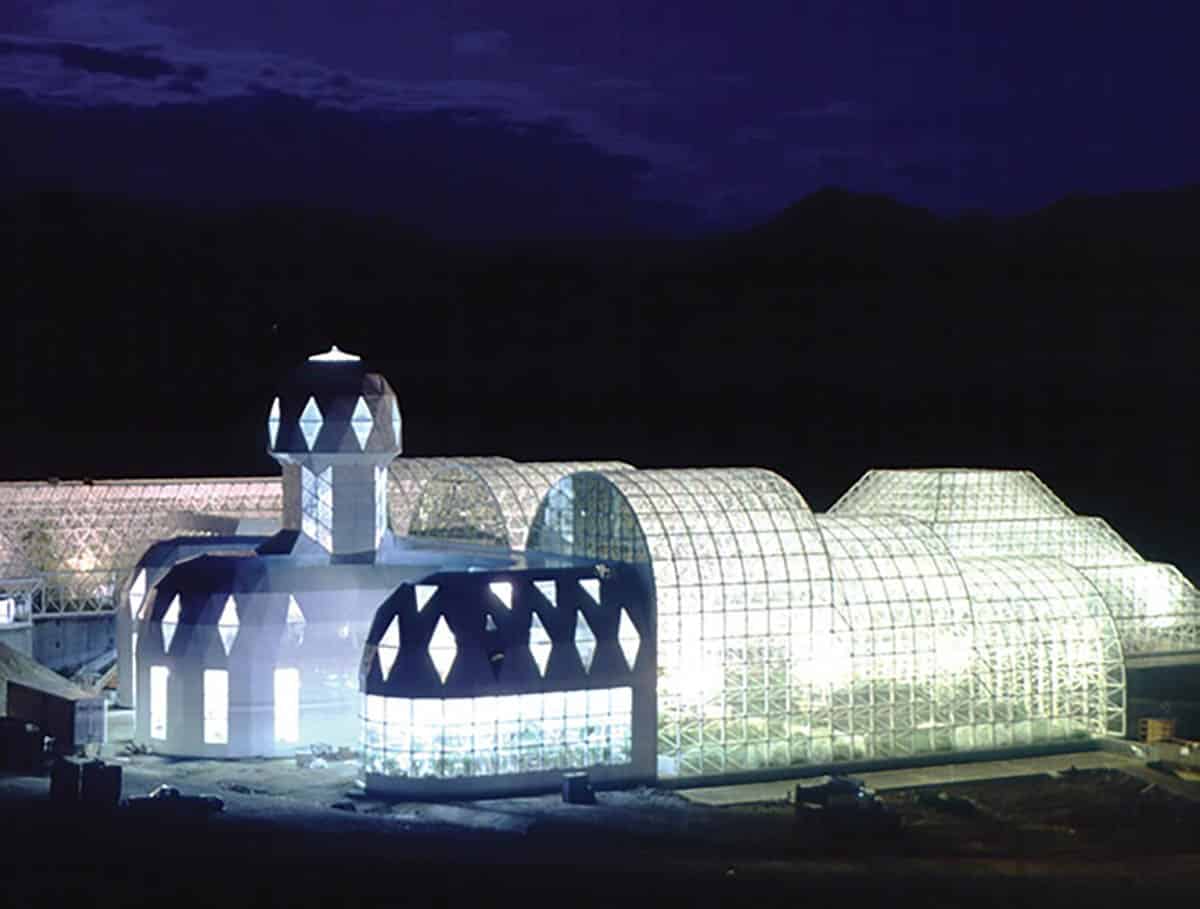
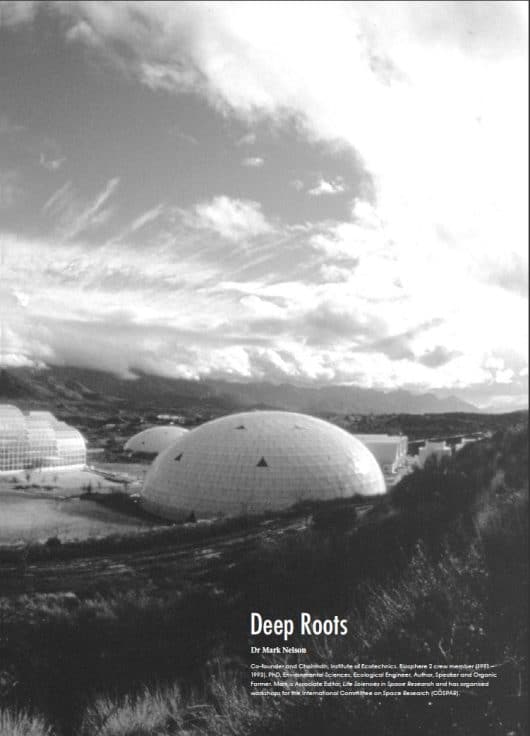
John Allen and his team designed and built Biosphere 2 to test the hypothesis that Biospheres were self-organizing systems, and the Japanese team led by Kenjii Nitta developing Biosphere J.


Test Module Biosphere 2


Shepelev & Gazenko

Eugene Odum


Gazenko and Allen

Josef Gitelson


Howard Odum

Alling and Allen

Biospheric science, is the largest scale possible to study within the life sciences, differing from systems ecology in that it deals with basically materially closed systems and thus complete cycling. Biospheres, as a class of objects to study, are defined as an energetically open, materially closed life systems, natural or artificial, capable of long term self-renewal under the proper conditions. [The Earth's biosphere is over three and a half billion years old, a trillion tons in weight, with over 10,000,000 species and certainly to a great extent self-organizing.]

Biosphere 2
The name Biospherics was agreed upon as the name for this new science by those gathered at the Second International Conference on Biospherics in Krasnoyarsk, Siberia, Russia, September, 1989, which was co-sponsored by the Institute of Biophysics (Russia) and the Institute of Ecotechnics (UK).

Closed Systems

Shepelev was the first man to live for 24 hours in a closed system with an algae species, Chlorella, at the Institute Biomedical Problema, Moscow, with Maleshka as his assistant on the outside of the system in 1961.

Gitelson, Gazenko, Shepelev, & Leonid at Biosphere 2

Allen was the first man to live for three days in the pioneering test module chamber at Space Biospheres Ventures in 1986 with complex ecological systems.

Space Biospheres Ventures Test Module Experiments


John Allen, Director of Research & Development, inside the Space Biospheres Ventures Test Module during the first three day human in a closed ecological system experiment (1988) checking the oxygen saturation levels in his blood.

Alling was his assistant on the outside of the system.

Abigail Alling & John Allen

The three experiments of Shepelev, Gitelson, and Allen laid the foundation for the 2.3 acre Biosphere 2 experiment.


Bios 3 (Krasnoyarsk)


A Russian experimenter in the Bios3 closed system.

Russian Bios 3
Project

by John Allen,
Chairman of Biosphere Foundation


Clair Folsome Ecospheres

Clair Folsome, who pioneered
laboratory-sized ecospheres.

Clair Folsome
Bibliography


Third International Workshop on Closed Ecological Systems
24-27 April 1992: Closed Ecological Systems and Biospheric Science General Overview

Workshop Introduction
by
Mark Nelson Director, Space Applications,
Space Biospheres Ventures Member
Biosphere 2 crew, 1991-93 closure.


Workshop Introduction


Fourth International Meeting on Closed Ecological Systems & Biospherics at the Linnean Society, London.
Linnean Society and the Institute of Ecotechnics
Linnean Society
London
April 10-12, 1996


Fourth International Meeting


Institute of Ecotechnics:
Scientific consulting body to the creation of SBV Biosphere 2 and test modules


Biosphere J (Japan)    

NASA Experiments Celss


Test Module photo: Roger Ressmeyer