

Officers @ Biosphere 2
1984-1994
Biography of John Polk Allen
Curriculum Vitae, John Polk Allen
Biography of Abigail Kingsley Alling
Curriculum Vitae, Margret Augustine
Curriculum Vitae,William F Dempster
Curriculum Vitae, Mark Nelson
Curriculum Vitae, Deborah Parish Snyder
Curriculum Vitae, Sally Silverstone
Curriculum Vitae, Mark Van Thillo

 
Biosphere 2 Ownership and Board of Directors

1984 -1994

 
Corporate Players:

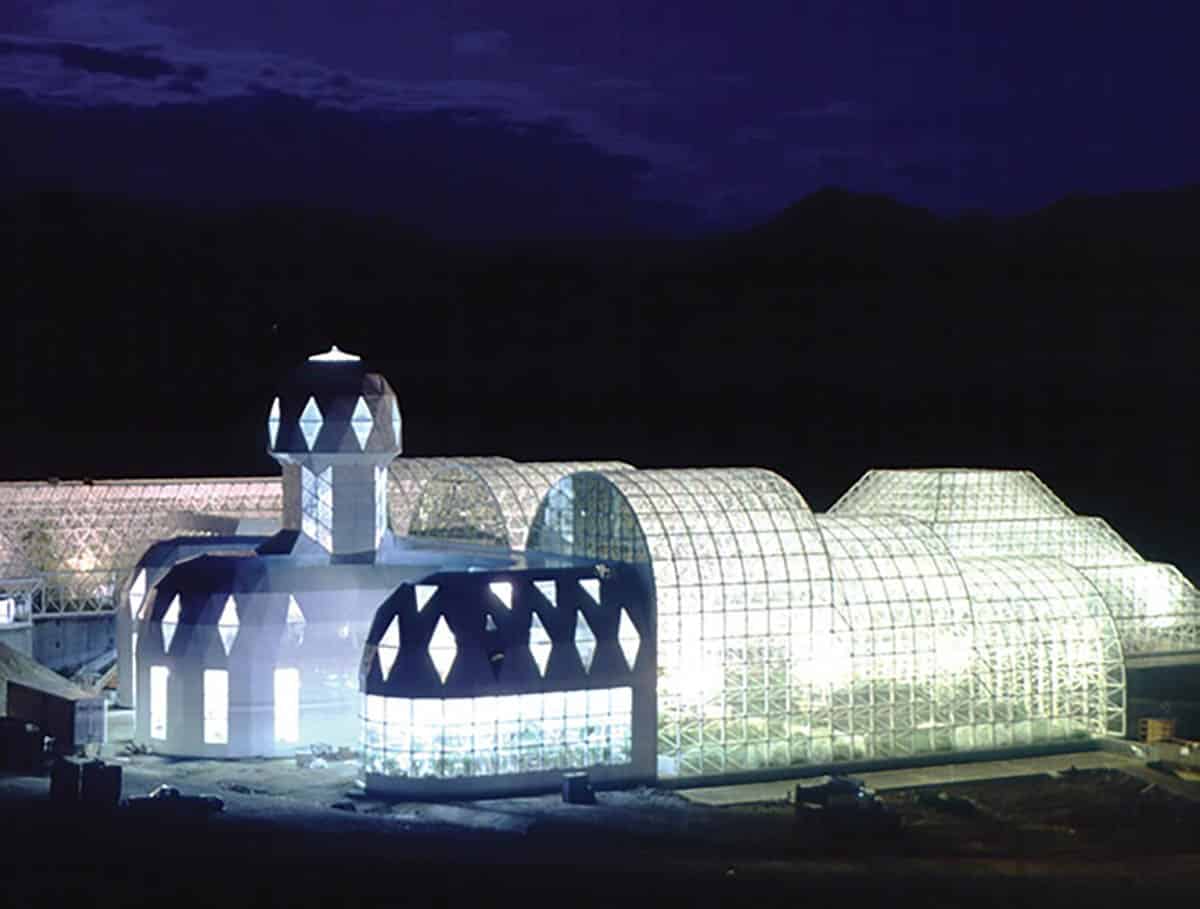
Space Biospheres Ventures (SBV), the owner of Biosphere 2 site and Biosphere 2 facilities, was a 50-50 partnership between Decisions Team Ltd. (DTL) and Decisions Investment Corporation (DIC) created in 1984. SBV located the site, and developed, designed, created, managed and researched the full operation of the $ 200,000,000 Biosphere 2 facility from 1984 to April 1, 1994.

Individual Players:

1. John Allen: Executive Chairman 1984-1986 and Director and Vice President Biosphere 2 Research, Development, and Engineering 1986-1994 who was a Director of DTL and invented Biosphere 2, and consulted the formation of the enterprise and co-founded Biospheric Design.

2. Margret Augustine: President and Chief Executive Officer of Space Biospheres Ventures who was a 20% owner of DTL plus 1% owner of DIC through Biospheric Design, the architecture company and prime contracting corporation for Biosphere 2. Margret, an architect, was also CEO for Biospheric Design, which was the prime contractor to build Biosphere 2.

3. Edward Bass: Chairman, 80% owner of DIC, and was part of the management team as Financial Director of Space Biospheres Ventures (SBV).

4. Marie Harding: Chief Financial Officer, 20% owner of DTL, Vice President and 1% owner of DIC through Biospheric Design and the Institute of Ecotechnics.

5. Mark Nelson: Director of Earth and Space Applications, Chairman of the Institute of Ecotechnics, (UK), and 20 % owner of DTL. Institute of Ecotechnics (IE) owned 5% of DIC and had a 1% royalty agreement with SBV 1984-94 for its intellectual capital contribution and as science consultant.

6. Kathelin Gray: Director and 20% owner of DTL and trained the Biospherians in coordinating the many different roles they had to play with her Theater of All Possibilities techniques.

From April 1 to June 1994, John Allen, Margret Augustine, Marie Harding, Edward Bass, Mark Nelson, Kathelin Hoffman, the the Board of Space Biospheres Ventures (SBV), negotiated an agreement "satisfactory to all;" which dissolved the SBV partnership and transformed the joint venture into a corporation with Ed Bass the majority owner and the Institute of Ecotechnics, DTL, and SARBID as minority equity owners.

Allen and the team that created Biosphere 2 then formed two new companies, Biospheres, LLC, to design and build the next generation of artificial biospheres, and EcoFrontiers LLC, to carry out projects in rainforest, savannah, sustainable agriculture, and urban biomes related to Earth biosphere problems. These two companies then merged in 1999 as Global Ecotechnics Corporation, which carries on several biospheric research and development programs. The Institute of Ecotechnics also continues its biospheric work, holding an annual international conference at Global Ecotechnic's Les Marronniers project in Southern France.

From April 1,1994 to December 31, 1995, Edward Bass operated Biosphere 2 through his appointed President, Steve Bannon and Scientific Committee, led by Wallace Broecker and Michael Crow of Columbia University. One of the purposes of Mr. Bass negotiating to gain majority control was to limit the scope of the Biosphere 2 Project by turning it over to reductionist scientists. This new reductionist oriented management team soon had a crisis with Mission Two and had to shut down Biosphere 2 down on September 6, 1994. It is important to realize that no further total system science has emerged from Biosphere 2 since that date.

January 1st, 1996, With the shutdown following from DI's new policy, Mr Bass turned the project over to Columbia University for five years to operate as a world class educational center with smaller scale ecosystems studies with emphasis on CO2 levels.

2003 - Columbia University, after being given a new ten year lease, 2000 - 2010, to continue with Biosphere 2, decided to withdraw from its agreement with Mr. Bass in 2003.


 Biosphere 2 Consultants and Researchers
1985 - April 1, 1994

The scientists listed below consulted and researched at Biosphere 2 during its first two-years of closure (1991-1993) and most continued their invaluable assistance through the six month Transition period that followed.

Many of these creative individuals volunteered their time to participate in the research, others were contracted as SBV project leaders, while integrated their ongoing research with the Biosphere 2 project.

Dr. John Avise (genetics)
Biology Department, University of Georgia

Dr. Michael Balick (rainforest)
Director, Institute of Economic Botany, New York Botanical Garden

Dr. Robert Bechtel, (psychology)
Department of Psychology, University of AZ Health Sciences

Dr. Mike Bender (biogeochemistry)
Professor of Geochemistry, University of Rhode Island

Dr. Ron Benoit (medical)
University of Arizona College of Medicine

Dr. Daniel Botkin (carbon cycle)
University of California, Santa Barbara

Dr. Ed Boyse (microbiology & immunology)
Distinguished Professor, School of Medicine, University of Arizona College of Medicine

Dr. Brandon (food crops)
California Coop Rice Foundation

Dr. Andrew Brittain (modeling)
NASA Marshall Space Flight Center

Dr. Wallace Broecker (oxygen cycle)
Professor of Geochemistry, Lamont-Doherty

Kurt Bumiller (analytics)
AeroVironment, Monrovia, California

Dr. Tony Burgess (desert/savannah ecology)
Coordinator Desert Laboratory, Tucson, Arizona

Dr. Benjamin Burrows (respiratory disease)
University of Arizona College of Medicine

Dr. James Byers (microbiology)
University of Arizona College of Medicine

Dr. William Chaloner (stomete/CO2)
Dept. of Geology, Royal Bedford Holloway College, UK

Dr. Jack Corliss (global modeling)
Senior Research Scientist, NASA Goddard Spaceflight Center

Dr. Bill Crump (medical)
Department of Family Medicine, University of Texas Medical Branch-Galveston

Craig Degenhardt (analytics)
ACCU-CHEM Laboratories, Richardson, Texas

Dr. Phil Dustan (ocean)
Dept. of Biology, College of Charleston

Victor Engel (systems modeling)
Doctoral student, University of Florida

Dennis Fitz (analytics)
AeroVironment, Monrovia, California

Dr. Robert Frye (carbon dioxide modeling)
Independent Research Consultant, Tucson, Arizona Desert

Dr. O.G. Gazenko (human factors)
Academician, Previous Director of Institute of Biomedical Problems, Moscow

Dr. Gelenberg (medical)
Head, Psychiatry Dept., Univ. of Arizona

Dr. Will Getz (animals)
Winrock International

Dr. Josef Gitelson (closed systems)
Director of Institute of Biophysics, Siberia Academy of Sciences

Dr. A.I. Grigoryev (closed systems)
Director of Institute of Biomedical Problems, Moscow

John Groh (mechanical engineering)
Environmental Research Lab, University of Arizona

Dr. Mark Gunion (medical)
Department of Pathology, UCLA School of Medicine, Los Angeles

Alan Haberstock (biomass studies)
Yale School of Forestry and Environmental Studies, Yale University

Dr. Peter Hackett (medical)
Denali Medical Research Project Alaska

Dr. Steven Harris (internal medicine)
Department of Pathology, UCLA School of Medicine, Los Angeles

Dr. Jason Hamilton (carbon modeling)
Center for study of the Environment, Santa Barbara, CA

Dr. Richard Harwood (agriculture)
Chairman of Sustainable Agriculture, Crop & Soil Sciences Dept., Michigan State University

Neal Hicks (mechanical engineer)
Environmental Research Lab, University of Arizona

Dr. Bob Howarth (ocean)
Atkinson Professor of Ecology and Environmental Biology, Cornell University

Dr. Steve Hoyt (analytics)
Environmental Analytical Services, San Luis Obispo, California

Dr. Kay Izard (primates)
Research Triangle Institute, Research Triangle Park, North Carolina

James Jungles (analytics)
BC Analytical, Glendale, California

Dr. Sam Keim (medical)
University of Arizona College of Medicine

Dr. Pat Kangas (marsh)
University of Maryland, S.C.

Richard Kruse (analytics)
P.E., Kruse Engineering, Flushing, Michigan

Dr. Judy Lang (ocean)
Coral Reef Biologist, Texas Memorial Museum

Dr. John L. Laseter (toxicology)
ACCU-CHEM Laboratories, Richardson, Tx

Dr. Norman Levine (dermatology)
University of Arizona College of Medicine

Dr. Dan Levinson (medical)
University Medical Center, University of Arizona College of Medicine

Dr. Jim Litsinger (integrated pest managment) Agricultural Systems Consultant

Dr. John Lonsdale (rainforest)
Royal Botanic Gardens, Kew, UK

Dr. Ganna Maleshko (closed systems)
Head, Closed Ecological System Research, Inst. Biomedical Problems, Moscow

Roxanne Marino (ocean)
Analytical Chemist, Cornell University

Dr. Michael A. McClure (IPM)
Professor of Plant Pathology at the U of AZ

Dr. Harvey Mieslen (medical)
Chief, Emergency Medicine at U of AZ

Dr. Scott Miller (entomology)
Bishop Museum, Hawaii

Dr. Harold Morowitz (closed systems)
Robinson Prof, George Mason University

Dr. Steve O'Brien (genetics)
National Cancer Research Institute

Dr. Howard Odum (systems modeling)
Professor of Environmental Engineering Science, University of Florida, Gainesville

Dr. David Ogden (medical)
University of Arizona College of Medicine

William Olkowski (analytics)
Bio-Integrate Resource Center, Berkeley, California Analytics

Dr. Carl Olsen (entomology)
Dept. of Entomology, University of Arizona

Dr. Barbara Page (animal system)
Veterinarian, Tucson, AZ

Dr. Donald Paglia (medical)
Department of Pathology, UCLA School of Medicine, Los Angeles

Robert Peak (analytics)
BC Analytical, Glendale, California

Dr. Nicholi Pechurken (closed systems)
Associate Director of Institute of Biophysics, Siberia Academy of Sciences

John Peterson (biomass studies)
Doctoral Candidate at University of Maryland

Dr. Jacob Pinnas (immunology)
University of Arizona College of Medicine

Dr. Dan Polhemus (entomology)
Technical Entomology Advisor, Bishop Museum

Dr. Sir Ghillean Prance (rainforest)
Director, Royal Botanic Gardens, Kew, U.K.

Dr. Reinhardt Rasmussen (atmospheric gases) Oregon Research Inst of Science & Technology

Dr. Eric Ravissen (medical)
Dept. of Health and Human Services, National Institutes of Health

Dr. George Ray (infectious disease)
University of Arizona College of Medicine

Dr. S. K. Runcorn (geochemical)
University of Newcastle-upon-Tyne, UK

Frank Salisbury

Robert Scarborough (soils)
Soils Consultant, Tucson, Az.

Dr. Jon Shaffer (modeling)
Closed Ecosystems Technology, NY

Dr. Thomas Siccama (biomass studies)
Yale School of Forestry and Environmental Studies, Yale University

Dr. Alvin Smucker (soils)
Soil Sciences, Michigan State University

Dr. Lydia Somova (microbiology)
Institute of Biomedical Problems,
Krasnoyarsk, Siberia

Dr. Don Spoon (microbiology)
Assistant Professor, Department of Microbiology, Georgetown University

Julian Sprung (ocean)
Aquarium Specialist

Dr. Michael E. Stanghellini (IPM)
Professor of Plant Pathology at the U of AZ

Troy Todd (analytics)
AADCO Instrument, Clearwater, Florida

Dr. Roy Verdery (medical)
Arizona Center for Aging, Dept of Geriatrics, U of AZ

Dr. Kristina Vogt (biomass studies)
Yale School of Forestry and Environmental Studies, Yale University

Dr. Daniel Vogt, (biomass studies)
Yale School of Forestry and Environmental Studies, Yale University

Dr. Martin Wahlen (oxygen cycle)
Professor of Geochemistry, Scripps Institution of Oceanography

Dr. Roy Walford (medical)
Department of Pathology, UCLA School of Medicine, Los Angeles

Dr. Peter Warshall (savannah & vertebrates)
Office of Arid Land Studies, University of Arizona

Dr. Waterhill (food crops)
Tuskegee University, Alabama

Lawrence Weber (medical)
Department of Pathology, UCLA School of Medicine, Los Angeles

Dr. Diana Wheeler (entomology)
Associate Professor of Entomology, University of AZ

Dr. Mark Yoshino (medicine)
University of Arizona College of Medicine

Dr. Sherrlyn Young (gynecology)
Private practice, Tuscon, Arizona